
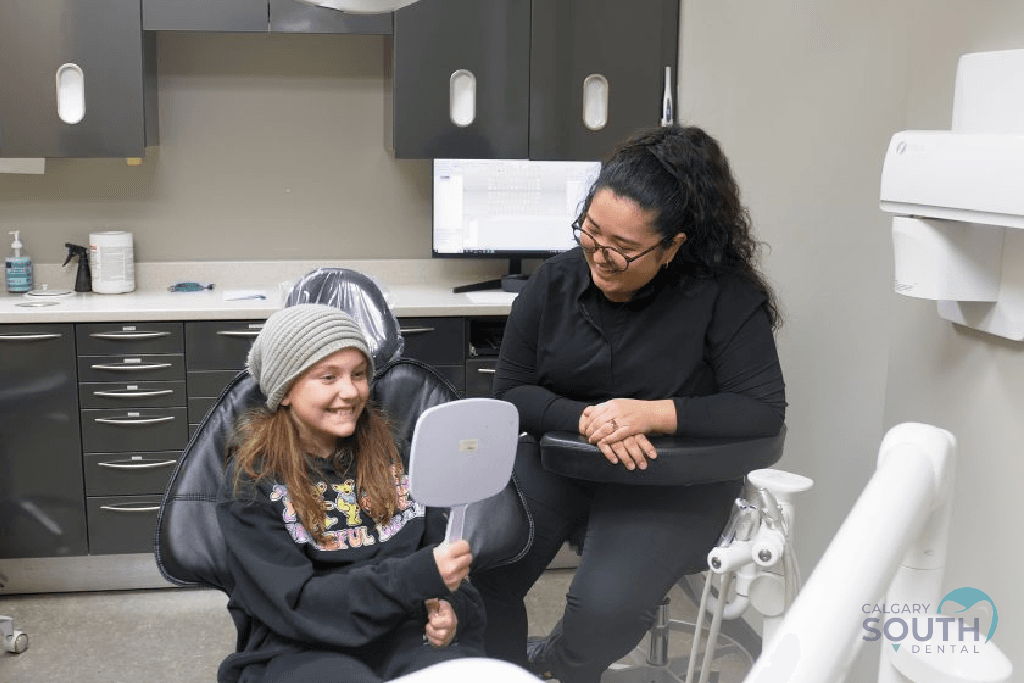
At Calgary South Dental, we want to help you understand why these issues happen and how to manage them so your smile stays healthy all season long. As the best dental clinic in Calgary, we see winter dental concerns often and can guide you through them with confidence and care.
Why Do Teeth Feel Sensitive in Cold Weather?
Question: Why do my teeth hurt or feel sensitive when the temperature drops?
Answer: Cold air is one of the most common triggers for tooth sensitivity. When enamel wears down or gums recede, the underlying dentin becomes exposed. Dentin contains tiny tubes that lead directly to the nerves inside your teeth, making them more responsive to temperature changes. Cold outdoor air and quick shifts between warm indoors and freezing outdoors can cause sharp sensations.
If your sensitivity lasts longer than a few seconds or becomes more intense, it could signal enamel erosion, decay, cracks, or gum recession. In that case, it’s a good reason to see your Calgary dentist for an evaluation.
Is Dry Mouth More Common in Winter?
Question: I feel like my mouth is dry more often in the winter. Is that normal?
Answer: Yes, dry mouth tends to be more common in cold climates like Calgary’s. The combination of outdoor cold air and indoor heating systems creates a dry environment that reduces saliva production. Saliva plays a key role in neutralizing acids, washing away food particles, and protecting enamel.
Staying hydrated with water, chewing sugar-free gum, and using a humidifier at home can help maintain saliva flow. If dryness persists despite these changes, a dental visit can identify underlying causes and offer treatments to protect your teeth.
Should I Be Concerned if I Have Persistent Winter Tooth Pain?
Question: I sometimes get pain that lingers in my teeth during winter. When should I see a dentist?
Answer: Occasional sensitivity from cold air is common, but persistent or intense pain is not something you should ignore. If discomfort continues for more than a few seconds, radiates to one specific tooth, or happens even when you’re not outside, it’s time to schedule an appointment.
Pain could indicate underlying issues such as a cavity, worn enamel, gum recession, cracks, or even damaged dental work. A professional exam at Calgary South Dental can help determine the cause and keep minor issues from becoming major problems.
Can Cold Weather Cause Cracks or Damage to Teeth?
Question: Is it true that winter conditions can make teeth crack?
Answer: Directly freezing temperatures do not cause teeth to crack out of nowhere, but temperature fluctuations can put stress on your enamel. Constant shifts between cold and warm environments can cause microscopic expansion and contraction, which might worsen existing tiny cracks.
Cracks can also become more noticeable in winter if underlying enamel wear exists. If you notice sharp pain on biting or when eating cold or hot foods, see your Calgary dentist soon to prevent further damage.
How Do I Protect My Teeth in Winter?
Question: What are the best ways to protect my teeth from winter dental concerns?
Answer: A few steps can make your winter dental routine more effective:
- Use a toothpaste for sensitive teeth: These formulas help block nerve responses and can reduce discomfort when used consistently.
- Choose a soft-bristled toothbrush: Gentle brushing protects enamel and helps prevent gum irritation.
- Drink plenty of water: Staying hydrated supports saliva production, which protects enamel.
- Cover your mouth outdoors: Wearing a scarf over your mouth reduces direct exposure to cold air.
- Maintain regular checkups: Winter is a great time for a dental visit, especially before holiday treats or after noticing any sensitivity.
These simple habits help strengthen your teeth, reduce sensitivity, and keep your smile healthy through the colder months.
Are Holiday Habits Affecting My Teeth?
Question: I eat more sweets and drink more hot drinks in winter. Is that affecting my dental health?
Answer: Yes. Seasonal beverages like hot chocolate, coffee, or sugary treats can increase acid exposure and feed bacteria that cause decay. Maintaining consistent brushing and flossing helps minimize plaque buildup. Rinsing with water after sweet foods and drinks is another simple way to protect enamel.
Healthy habits, even during holiday season indulgences, go a long way in preventing cavities and sensitivity.
When Should I Contact Calgary South Dental?
If winter tooth sensitivity is increasing, causing sharp pain, or lasting longer than a few seconds, it’s time to contact a dentist. Persistent symptoms may indicate enamel wear, gum recession, a cavity, or even a small crack that needs treatment.
Calgary South Dental, the best dental clinic in Calgary, is here to help you stay ahead of winter dental concerns. If you have been searching for a dentist near me because of cold weather discomfort or any oral health worry, book an appointment with us today.
Calgary South Dental
Ready to book your visit?
Call 403-984-1616 or book online — new patients are always welcome.
Book Appointment→